John Kelly, RIP: “We win when we show up.”

Originally posted on Braided Trails.

John Kelly, a warrior in defense of the dignity of human life, died on November 14. He was an advocate for disability rights, and flowing naturally from that, he was against assisted suicide. He came to Concord more than a decade ago to say so to a legislative committee. I was there for the same reason, and I left much less of an impression than he did.

He started by chewing out the legislators for the ill-kept winter sidewalks that had slowed him down as he made his way in his wheelchair towards the State House. Jaws dropped. It was a splendid fleeting moment. 

He then said what he came to say, and left written testimony for good measure, on behalf of Not Dead Yet and Second Thoughts Massachusetts. 

We were the progressive voice in Massachusetts that defeated the assisted suicide ballot question. Our opposition is based in universal principles of social justice that apply to everyone, whether disabled or not….We chose our name Second Thoughts because we find that many people, once they delve below the surface appeal of assisted suicide, have “second thoughts” and oppose it. 

…The day [New Hampshire’s proposed] bill goes into effect, thousands of people will be instantly made eligible. For example, my quadriplegia constitutes “an incurable and irreversible condition.” It has “no known treatment,” and likely “will result in premature death.” …Legalizing assisted suicide sends the wrong message to anyone who depends on caregivers, the message that feeling like a burden is not only an acceptable reason for suicide, but a justification for our health care system to provide the lethal means to end your life. We are not better off dead. 

[John Kelly, testimony to New Hampshire House Judiciary Committee, 2/5/14, as I recorded in my own notes.]

That bill failed back in 2014, not least because of John’s testimony. 

I didn’t know him personally beyond a quick introduction the day he came to Concord. I attended hearings in Boston and Hartford when other states considered assisted suicide bills, and John was at each one. 

He understood the value of coalitions and teamwork. He wasn’t shy about calling for united action. My report on a Massachusetts assisted suicide bill in 2017 included a link to the Facebook post John had made before the hearing. 

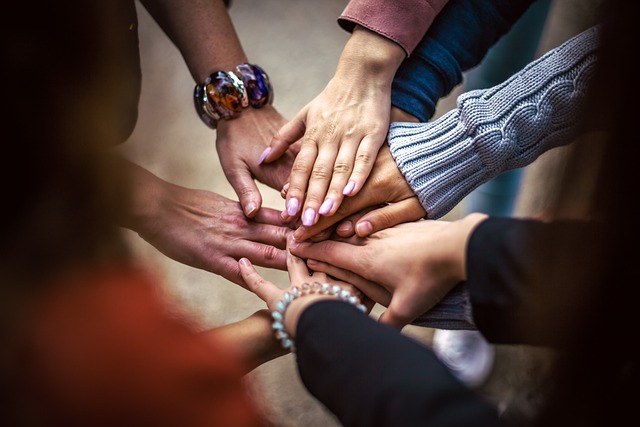
We win when we show up. All devalued communities are under threat: disabled people, people of color, old people, ill people, LGBTQ people, poor people, autistic people, people experiencing depression, abused people, and more. Even wealthy people are endangered because family might care more about inheriting an estate than caring for a seriously ill person. And everyone is at risk for misdiagnosis.
We need you to come testify for 3 minutes, or come and support people who are testifying . Everyone who comes will be making a difference!

…This is life-or-death, people. Solidarity.

[John Kelly Facebook post, quoted at Leaven for the Loaf, 9/5/17.]

You heard the man: show up to hearings. Bring allies. Fill the seats, encourage one another, testify. 

There are all kinds of day-to-day ways to counter the pernicious notion that it’s better to be dead than disabled. Sometimes, though, going to the State House is the only way to get the message across. A packed hearing room is its own kind of testimony. 

John Kelly knew that. He wouldn’t want me to forget it.

Becoming a Granite State Walker

Some time ago, a local writer interviewed me about the advantages of getting outside to walk on trails and paths and sidewalks. The resulting article sparked questions from readers, which prompted me to write about how I became a Granite State walker. I can hope this inspires soon-to-be-walkers everywhere.

(And for a bit more inspiration, you can read about one of my favorite walking trips by heading over to Granite State Walker and reading the three-part post entitled One Way to Celebrate.)

Getting started

For someone who hasn’t yet developed a habit of walking or hiking, what’s the first step? I’m supposed to say “get the OK from your health care provider.” I confess that I did no such thing. 

Next thing to do is get good shoes. Think of them as a prescription: high priority, worth the price, essential to health. I’m a thrift-store shopper for the most part, but when it comes to footwear for walks and hikes, I head straight for the local specialty shoe store with a staff accustomed to working with active adults. Good shoes are cheaper than medical care necessitated by poorly-fitting shoes or a sedentary lifestyle.

If you’re exploring trails in New Hampshire, get a Hike Safe card online from New Hampshire Fish & Game, and read the Hike Safe website.

If your mobility is impaired for any reason, even temporarily, work with your health care provider for strategies that will help you explore the outdoors.

Where to walk

The hardest part of developing a habit of walking is simply deciding to get out there. Walk around the block or through the neighborhood. Ten minutes on pavement is better than ten minutes of looking the nearest screen. Just start!

If you rely on assistive devices for mobility, look for trails that are paved (like the Windham and Londonderry trails) or are otherwise well-surfaced.

Look up your town’s Parks and Rec department and Conservation Commission. Both are likely to have properties with trails and trail maps. Check out state parks, too. 

The Fire Tower Quest sponsored by New Hampshire Forests and Lands led me to towers near and far, from Federal Hill in Milford to Mt. Magalloway up in Pittsburg. The views are worth the uphill walks. 

The Forest Society has properties all over New Hampshire, many of which have marked trails. Find out about properties and download their maps at https://www.forestsociety.org/visitor-guide. A few of my favorites are Dame Forest in Durham, Madame Sherri Forest in Chesterfield, and the Merrimack River Conservation and Education area in Concord.

Browse the New Hampshire Rail Trails Coalition website, nhrtc.org. I’ll bet there’s a rail trail near you.

What’s the difference between a hike and a walk? Very subjective. To me, if I need boots, that’s a hike. Don’t let yourself think you’re not a hiker just because you’re not on the way to the summit of Mt. Washington. 

Safety

I always let a family member know where I’m going and when I expect to be home. While I prefer solo hiking, I know it’s a good idea to hike with a partner. When I choose a solo trip, I’m deciding not to have someone around who can summon help if I’m injured and unable to fend for myself.

New Hampshire Fish and Game offers a list of the Ten Essentials to carry on any hike. Even on a local walk, I’m sure to have my phone, keys, a whistle, a small flashlight that hangs on my keychain, and ID. If I’m on a trail, I have a printed map. 

I always bring my phone, and I never stake my life on it. Batteries run down. Some of the places I go, even in my own town, have weak or no cell signal. Calls might be impossible and texts might be sketchy.

Why bother?

I started recreational walking for my own mental health. As I pace, I can pray, or mull over a solution to a problem, or learn from what I see around me. As a young mother of five, I found the walks refreshing. Now that my children are grown, I still do.

“Movement is medicine,” says my massage therapist. My experience bears that out. I have a genetic predisposition to some annoying things that have been kept at bay by regular physical activity. Joints including my spine have stiffened; they’d be stiffer still if I weren’t literally putting them through their paces several times a week.

Walking teaches me to appreciate where I am. I am no Olympic athlete. My aerobic capacity is not comparable to that of a distance runner. I will never set a speed record beyond the ever-challenging Personal Best. And you know what? I’m a walker anyway. I’m grateful for every step. Gratitude gets easier with age.

Finally, walking has taught me to see what’s around me. I see things that a runner or cyclist or motorist would miss.

I was in my mid-thirties when I started walking for exercise. Most of those walks were once around the block (did I mention I have five children?). Now, thirty years later, I just wrapped up a trip that included 66 miles of walking. Your style and goals might be different, and that’s fine. Just start.

This is a condensation of a post that first appeared at Granite State Walker.

Safe Havens: what they are, and how they save lives

Maria V. Gallagher of the Pennsylvania Pro-Life Federation invited me to her Lifelines Radio podcast to talk about Safe Haven laws, state-by-state policies designed to protect newborns who might otherwise be abandoned with no care. How do these life-affirming laws work, and how might they be improved?

Click this link to listen: Interview with Ellen Kolb – Baby Safe Haven Laws

radio microphone

You can find episodes of Lifelines Radio on Spotify and other popular podcast platforms.