“When you claim Christ you choose exile”

“…when you claim Christ you choose exile, and therefore will be held to a different standard, entirely, than the world’s.”

The best thing I can do for my readers today is point them to someone else’s blog. Elizabeth Scalia has written something at Word On Fire to prompt reflection and prayer. It is a timely meditation now, when I’m tempted to let politics take the place of things that are truly valuable.

“…He, the Christ, is the Holiest within the Holy Thing that is creation, and that we too are Holy Things, able to work and walk with him within that swirling, vibrant, energetic, ever-ancient-ever-new Holiness, if only we keep our eyes on the One, ignoring the whirlwinds both exterior and interior that distract us, shake our faith and ultimately sink us.

Read Throwing Away Our Holy Things. Now excuse me while I go pray for the grace to approach my writing the way Scalia approaches hers.

Header image by Bernd Hildebrandt from Pixabay

Open Book: history, hiking, and vintage JPII

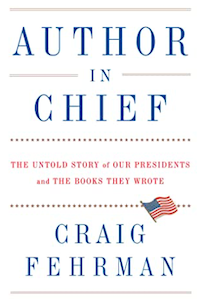
I’m indulging my love of politics and American history not by watching the news non-stop this election season, but by reading Author in Chief: the Untold Story of Our Presidents and the Books They Wrote, by Craig Fehrman. Fehrman shows that there’s more to the presidential genre than campaign biographies and memoirs. He puts each president’s work in historical context, and he offers a writer’s view of the relative merits of various books. He has sparked my curiosity about presidential works with which I’m unfamiliar, and perhaps there’s an #OpenBook post ahead mentioning some of them.

As a trail-loving New Englander, I’m loving Following Atticus. This is the true story of an out-of-shape Massachusetts journalist, Tom Ryan, who adopted a pint-sized schnauzer puppy named Atticus, and set out to hike New Hampshire’s “4000-footer” mountains with his little canine friend. This sounds like the makings of a comedy, but Ryan delivers something very different. Thoughtful musings on his life, work, and friends alternate with accounts of challenging hikes with his intrepid little dog.

I continue to make my way through The Gospel of Life by St. John Paul II. Perhaps because I’m older, or perhaps because I’m giving the words time to sink in, this has been very different from my earlier quick readings of the document a couple of decades ago. I’ve been reading a section at a time as lectio divina for each day.

The Open Book linkup is hosted by blogger Carolyn Astfalk and the team at CatholicMom.com. 

On Amy Coney Barrett

As one Catholic woman to another, I send my best wishes to Judge Amy Coney Barrett as the U.S. Senate votes on her nomination to the Supreme Court.

I don’t know how she’d vote on a direct challenge to Roe v. Wade, and neither do you. Even so, I think every objection to her nomination comes down to one thing: the possibility that she might have even the teensiest reservation about abortion. Any objections to her faith I’ve encountered are all about that. It’s not that she’s Catholic; it’s that she might take Catholic teaching on the nature of abortion and conscience rights seriously.

That’s “might.” One may hope.

Note that in a buffer zone case in 2016, she voted with the majority to uphold a buffer zone law in Chicago that employed a “bubble zone.” That decision also pointed out that in light of SCOTUS’s McCullen decision, the Chicago case would be vulnerable on further appeal.

I believe it’s pure theater to say that she poses a threat to everyone’s health insurance, by means of a pending court challenge to the “Affordable Care Act,” better known as Obamacare.

Yes, theater. The ACA has no severability clause, thanks to the Senators (including one of my New Hampshire Senators, Jeanne Shaheen) who voted to pass it without one. If SCOTUS throws out the law because no single part of it can be separated from the rest, they’ll be following the path laid out for them by the House, Senate, and former president Obama in 2010. (But see this commentary from ScotusBlog outlining less extreme possibilities.)

I’ve asked my Senators to vote to confirm Judge Barrett, even though they have both declared their firm opposition to her, or perhaps only to her nomination. It’s hard to tell if they can distinguish the woman from the man who nominated her.

Will the result of this nomination be judicial recognition of the dignity and worth of each human being without exception? I have no idea. As I said, one may hope.