Six Years After Gosnell Conviction, N.H. Laws Unchanged

Update: since this 2019 post, New Hampshire has passed a Fetal Life Protection Act that limits abortion after 24 weeks, with exceptions for medical emergencies and eugenic abortions. The state still does not have laws protecting children who survive attempted abortion, requiring abortion facilities to meet the same standards as ambulatory care facilities, or regulating who may perform abortions or prescribe chemical abortion pills.


May 13, 2013, Philadelphia: Kermit Gosnell was convicted of murder, manslaughter, and a couple of hundred lesser offenses. He’s in prison for life. If he were released, he could set up shop in New Hampshire and commit with impunity some of the same actions for which he’s now imprisoned.

Gosnell snipped the necks of children who survived his attempts to abort them, one of whom he joked was big enough “to walk me to the bus stop.” Karnamaya Mongar, a woman who came to him for what she thought would be a safe and legal abortion, was sedated to death by the staff Gosnell was supposed to oversee, using protocols he had established to compensate for the staff’s lack of formal medical training.

Locked emergency access to Kermit Gosnell’s facility in Philadelphia. Image from the Grand Jury report on Gosnell.

The carnage was uncovered only accidentally, triggered by a 2010 drug raid at Gosnell’s “clinic,” which was a pill mill on top of its other charms. (Convictions on twelve drug offenses netted him another 30 years in prison.)

He got away with abusing women and children for a long time, because the one-time governor of the Commonwealth of Pennsylvania – a Republican named Tom Ridge, later entrusted with the Department of Homeland Security – ordered that abortion regulations not be enforced. They might have interfered with abortion access, and that was something Ridge wouldn’t countenance. Ridge’s policy prevailed for an appalling length of time.

Karnamaya Mongar isn’t around to offer her thoughts on Ridge’s defense of her rights.

New Hampshire differs from Pennsylvania in that we don’t have unenforced abortion regulations as far as we know; instead we have next-to-no regulations.

Infanticide: Since the Gosnell trial, New Hampshire legislators have considered three bills that would have required that children surviving attempted abortion be provided with the same level of care that would be given to a child born at the same stage of fetal development without any abortion attempt. Two of those bills were killed (2016 and 2017), and the third was tabled in 2018 and never revived.

I attended the hearings and executive sessions on those bills. Opponents complained that such measures would tell doctors how to practice medicine and would cause undue distress to women seeking abortion due to fetal anomalies. Rep. Paul Berch’s remark on HB 1627 was instructive: “This bill seeks to address a problem that appears not to exist in New Hampshire.”

Well, since there is no evidence that New Hampshire public health authorities publish data on the incidence of live births following induced abortion, it’s easy to say a problem “appears not to exist.”

In 2013, Pennsylvania jurors recoiled at Gosnell’s horrific execution of the children who survived his attempt to abort them. Six years later, in our New Hampshire, I doubt there’s a prosecutor who would consider Gosnell’s spine-snipping worth prosecuting. Here, a woman seeking abortion is entitled not only to a terminated pregnancy but a dead child. New Hampshire legislators have passed up several chances to establish a different policy.

Mid- and late-term abortions: Among the crimes of which Gosnell was convicted were more than 200 violations of the Pennsylvania law restricting abortions to a maximum of 24 weeks’ gestation. No such restriction in New Hampshire, then or now.

Type of facility: The Gosnell grand jury sharply criticized the refusal of Pennsylvania authorities to subject Gosnell’s clinic to the same inspection and licensing requirements as ambulatory surgical facilities, as Pennsylvania law required. No such law in New Hampshire, then or now.

Personnel performing abortions: Gosnell employed people who were untrained and unlicensed to “care” for the women who came to him for abortion. In New Hampshire, there are no restrictions whatsoever on who may perform abortions. No medical training is required, and no particular kind of facility is required.

I’ve heard doctors who should know better argue that abortion in New Hampshire is self-policing, and that any incompetent abortion provider would be dealt with by the appropriate certifying board. Assuming that’s true – and I think it’s a generous assumption – what if the abortion provider isn’t subject to a certifying board? Who’s watching out for women then?

So the next Gosnells could come to New Hampshire and do late-term abortions, dispose of the “products of conception” (born-alive or not) as they saw fit, and put women at risk by employing unlicensed and untrained personnel (and indeed forgo a medical license themselves) – all without breaking any current state law.

Watch out for the drug laws, though. They are what finally tripped up Gosnell in Pennsylvania.

That’s what I mean by New Hampshire being Gosnell-friendly. It gives me no pleasure to say that.

The day of Gosnell’s conviction, Planned Parenthood sent out a fundraising email calling abortion regulations “extreme” and “outrageous.” Again, Karnamaya Mongar couldn’t be reached for comment.

And Gosnell himself? “I very strongly believe myself to be innocent of the heinous crimes of which I am accused.” (See interview in the book Gosnell by Ann McElhinney and Phelim McAleer.)

I hope Gosnell’s victims rest in peace. I hope he undergoes a change of heart. And I hope our beloved state learns from his crimes and their aftermath. It’s not too late.

This post originally appeared on GraniteGrok.


If the Gosnell case is new to you, go to YouTube and find “3801 Lancaster: An American Tragedy,” or pick up the Gosnell book, or watch the film Gosnell. I also recommend the grand jury report on the case (PDF here).

Post edited to add photo from Gosnell grand jury report.
Infanticide Without Representation: a Congressman rejects Born-Alive protections

Want to change the stigma around infanticide? Easy: just rename it. The catch-all term “reproductive rights” will cover it. That’s the protocol that’s been adopted by my Member of Congress, at any rate.

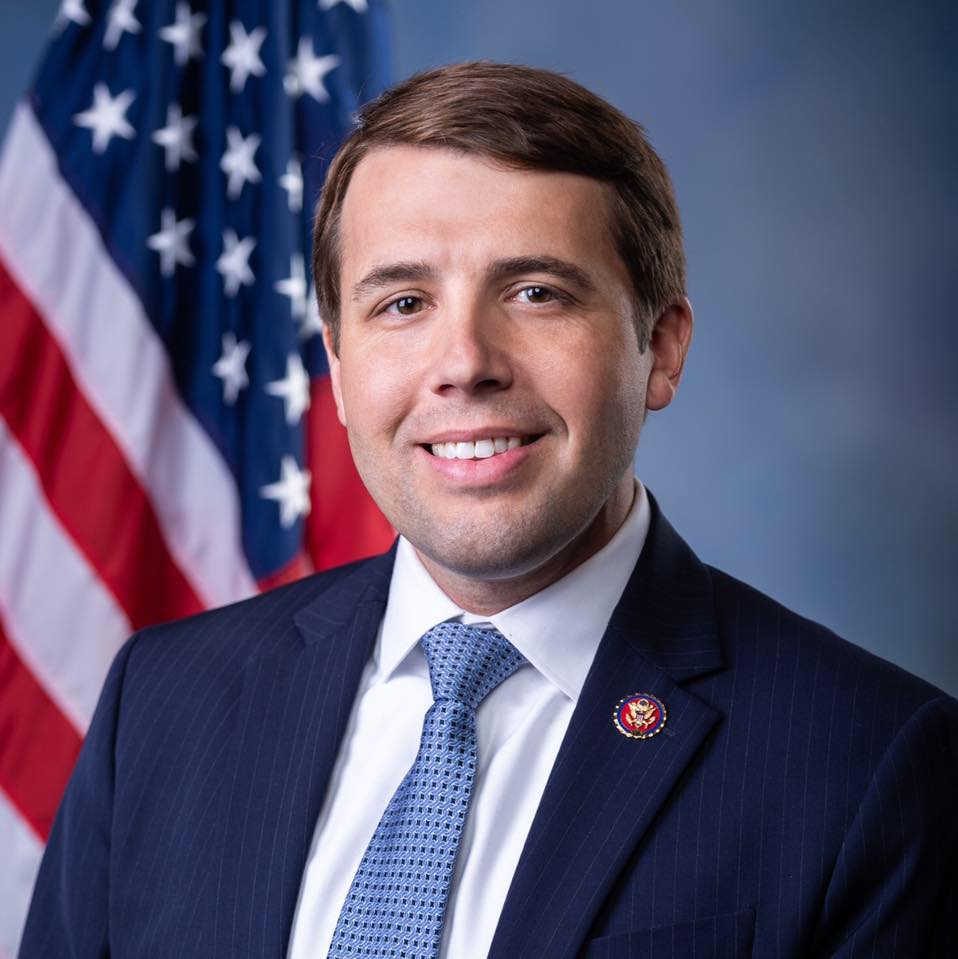
Congressman Chris Pappas (D-NH)

I recently sent an email message to Congressman Chris Pappas (D-NH) regarding the Born-Alive Abortion Survivors Protection Act. I asked him to support a discharge petition that would bring the bill to the House floor for a vote. I pointed out that the bill was about taking care of newborn children who survive attempted abortion. I said that I knew we disagreed on abortion, but surely we could find common ground on caring for infants.

What I received in return was an email from Pappas’s office about his support for reproductive rights. It was obviously a form letter, designed to address anything even remotely touching on abortion. Just one problem there: I hadn’t written to him about reproductive rights; I had written to him about caring for newborns. (Senator Maggie Hassan sent me a similar non sequitur earlier this year.)

Congressman Chris Pappas thinks caring for newborns is a threat to reproductive rights, if those newborns are the survivors of an attempt to kill them in utero. This is the man representing my district in Congress.

Here’s his message in full. Note well the contact information he provides at the end.

Thank you for contacting me regarding reproductive rights. I appreciate you taking the time to share your thoughts with me, as it helps me better represent you and New Hampshire’s priorities in Congress.

I believe that every American is afforded the right to privacy and should have the freedom to make personal decisions about their health care.  I am committed to ensuring that women have access to the full range of reproductive health care choices. As a nation, we should focus on our common ground and shared goals – educating our children on sexual health, bolstering economic opportunity, and protecting our civil liberties.

Access to proper health care should be a right, and when women are denied the freedom to make their own personal health care decisions we not only limit their liberties but also their economic opportunities. We owe it to ourselves and to our neighbors to be as compassionate and understanding of their personal medical decisions as possible. Please know that I will keep your views in mind when considering legislation concerning reproductive rights.

Thank you again for sharing your thoughts on this important matter, and I look forward to keeping in touch. I strive to maintain an open dialogue with the people of New Hampshire about issues that matter to our state. If you have any further questions or concerns, please feel free to contact my Washington, DC office at (202) 225-5456 or my Dover office at (603) 285-4300. I also encourage you to keep up with the work I am doing by signing up for my weekly update at https://pappas.house.gov/contact/newsletter-subscribe.

“We owe it to ourselves and to our neighbors to be as compassionate and understanding of their personal medical decisions as possible.”  That sentence only makes sense in the context of the born-alive bill if you think infanticide is a “personal medical decision.” Someone else’s decision, of course; the doomed child has no voice.

“Access to proper health care should be a right…” Abortion isn’t health care, and neither is infanticide.

A change of heart is always possible, even for Members of Congress. My Congressman needs to hear from people who have enough compassion and understanding to assure him that’s it’s OK to support care for newborn children who have survived abortion.

More than once in the course of writing about life-issue legislation, I’ve asked a question: is a woman seeking abortion entitled to a terminated pregnancy or a dead baby? What happens when the induced abortion results not only in termination of pregnancy but in a live birth? In an uncharitable moment, I wrote that the dead-baby caucus was in charge.

I guess I was right.

Originally published at Leaven for the Loaf. Edited 2026 with updated link to Congressman Pappas’s newsletter.

From Misery to Ministry

Agnesi book coverAfter discovering Tony Agnesi through his book A Storyteller’s Guide to a Grace-Filled Life, I’ve looked forward to his newest project. It’s here: A Storyteller’s Guide to Joyful Service: Turning Your Misery Into Ministry takes a look at dealing with tough times, be they simple disappointments or deep griefs, and using them as opportunities for growing in service to other people.

“Lord, if you had been here…”

In an informal style, Mr. Agnesi shares small stories exploring painful situations and ways of responding to them. He is writing for a Christian audience, assuming that his readers have some familiarity with both faith and disappointment. He knows that Martha’s words to Christ in time of bereavement – “Lord, if you had been here, my brother would not have died” – reflect a deeply human reaction to loss. Where to from there?

Tony Agnesi
Tony Agnesi

One step at a time, responds Mr. Agnesi. He has confidence that in small ways, a day at a time, anyone experiencing major or minor miseries can be equipped for ministry to others. His words might not reach someone in the grip of immediate and profound grief, when looking ahead seems like too much to bear. For anyone capable of reflection, though, Turning Your Misery Into Ministry can be thought-provoking and inspiring.

Small Steps: A Path to Service

The author’s own experience with serious illness makes this a book written for other people, not at them. His descriptions of the ministries in which he’s personally involved enrich the book. His message on every page is I can do this; so can you.

The actions he advises seem obvious, but it’s precisely when challenges are oppressive that solutions are obscured. Pray, even briefly; look a stranger in the eye and say hello; give the gift of listening; do simple things for one’s spouse: page after page is filled with reminders of the little things that draw one’s attention outward, discouraging self-absorption.

That’s not to say he advises forgetting about self-care. He knows that he and his readers need healing and grace and time for themselves.

Grace in the Virtues

Virtues in action are basically habits developed over time. Mr. Agnesi packs his small book with short suggestions for ways to develop those habits. His book concludes with a section called “Grace in the Virtues,” which may seem an odd subject to consider when dealing with miseries large and small. After all that precedes the closing section, though, his reflections on grace and virtue make sense.

Each little step he advises is underpinned with encouragement towards the simple virtues of gratitude and humility. Without them, no one can be equipped for ministry. No formal training or credential can replace them. With them, anyone can begin to offer authentic service to others. Wherever authentic service exists, there is ministry.

Turning Your Misery Into Ministry ends with an exhortation to be passionate, unafraid, and joyful. With the voice of a neighbor, Tony Agnesi invites his readers to join him.

(Disclosure: I received a complimentary copy of the book in exchange for a review.)