On timing, “moderates,” and life

Is it ever “ill-timed” to assert that life is the fundamental civil and human right? My experience on the sidewalks and in the State House tell me that there will always be people who think so. I find encouragement in Dr. Martin Luther King’s response to a remark about human rights work being ill-timed.

In 1963, a few months before Dr. King’s “I Have a Dream” speech at the March on Washington, he and many other civil rights activists converged on Birmingham, Alabama to challenge racial segregation. Their campaign was marked by intensive planning, discipline, and urgency as they reached for justice and reconciliation.

From a 1963 UPI report on the Birmingham demonstrations: “King reacted strongly… to a statement by Attorney General Robert Kennedy suggesting that the all-out integration drive here was ill-timed. ‘I grow weary of those who ask us to slow down,’ King told a reporter. ‘I begin to feel that the moderates in America are our worst enemy.’”

As AG, RFK had sent federal marshals to protect the Freedom Riders who worked to desegregate public transportation in the South. Yet there he was just a couple of years later, talking about another civil rights campaign being ill-timed. King wasn’t afraid to push back – and maybe put some starch back in the Attorney General’s spine.

King used the word “moderates” ironically. Civil rights, but not yet is a phony kind of moderation.

And so it is with denying not only the right to life but the right to defend it. Such denial will never be moderate, even when cloaked in euphemisms like “reproductive justice.”


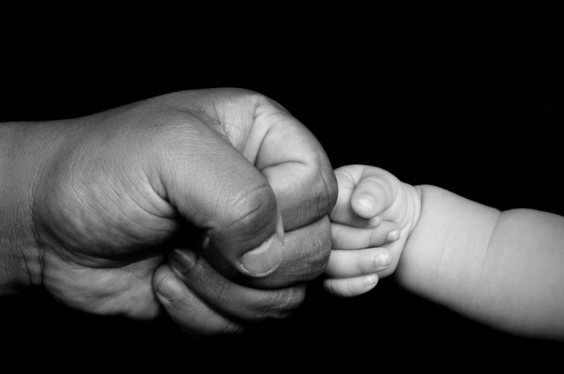
Header photo: Pixabay. Post condensed from a series of MLK Day posts by the author at leavenfortheloaf.com.
Not to be denied: abortion survivors speak out together

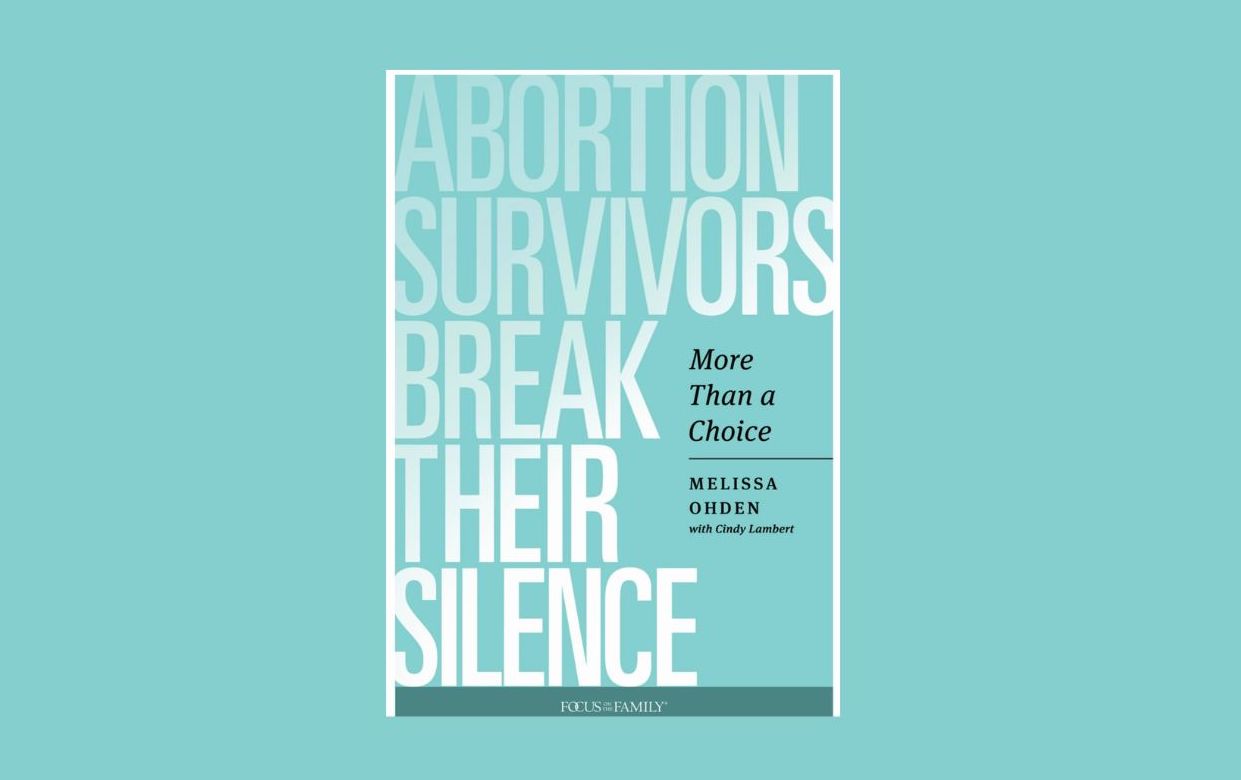
Abortion Survivors Break Their Silence by Melissa Ohden with Cindy Lambert (Focus on the Family, 2024)

“There’s no such thing as abortion until birth.” I’ve heard that time and again from legislators who resist “born-alive” bills that would ensure care for children who survive attempted abortion.

Melissa Ohden knows better. She survived an attempt to abort her, somehow emerging alive five days after her mother endured what was supposed to be a saline abortion. As an adult, when she learned that there were other survivors – when she experienced a life-changing “you, too?” moment – she founded the Abortion Survivors Network.

As of late 2023, ASN has worked with more than 700 survivors from all over the world. “In a world that has, by and large, turned a blind eye to abortion survivors, we desperately need each other,” says Ohden.

She has collected a few survivors’ stories in Abortion Survivors Break Their Silence. In the book, they share what they’ve learned about the attempts to abort them. Each has a unique story of discovery, struggle, and healing.

Some of the survivors bear physical scars. All have had to come to terms with invisible scars as well. The process of understanding and forgiveness between parent and child is complicated; the survivors in this book recount their varied paths.

There are also stories of the birth mothers, who made their abortion decisions under varied circumstances. Coercion, financial straits, abandonment by the child’s father, bad timing: for each abortion survivor’s story, there’s a birth mother’s story, too. That’s one of the strengths of this book.

Compassion informs every chapter. There’s no condemnation for the people involved in the abortion decisions. Ohden writes, “If, while you’re reading, you find yourself picking up a stone to throw – please, be sure to put it back down.”

The people whose stories are recounted in the book tell of how their Christian faith has helped them come to terms with the attempts to terminate their lives. Their candor about faith is hardly a surprise, after the candor it took to go public with their history of trauma. 

Ohden’s book is a much-needed call to listen to survivors. Their stories can enlighten even pro-lifers who think they’ve heard it all. The book ought to be on the resource shelf of every agency and church engaged in outreach to abortion-vulnerable women. And yes, it belongs on the desk of every policymaker, even the ones who’d want to shove it into a bottom drawer and forget it.

I recall a committee vote a few years ago on born-alive legislation in my state. Before the vote, the committee chair took time to read a prepared statement – was she afraid she’d get the words wrong if she didn’t have a script? – elaborating on a core belief that she reiterated several times: “there is no such thing as abortion until birth.” She had to say it over and over, as though chanting the words could make the false assertion true.

That legislator prevailed that day. She’s still in office, still on the same committee, still defending abortion in the name of reproductive rights.

And at the same time, abortion survivors are speaking out, and they will not be denied a hearing. Look them in the eye and pay attention. Ready or not, they’re here to stay.


(Note: I received an advance review copy of this book.)

Open Book: Bonhoeffer and Muggeridge for Advent

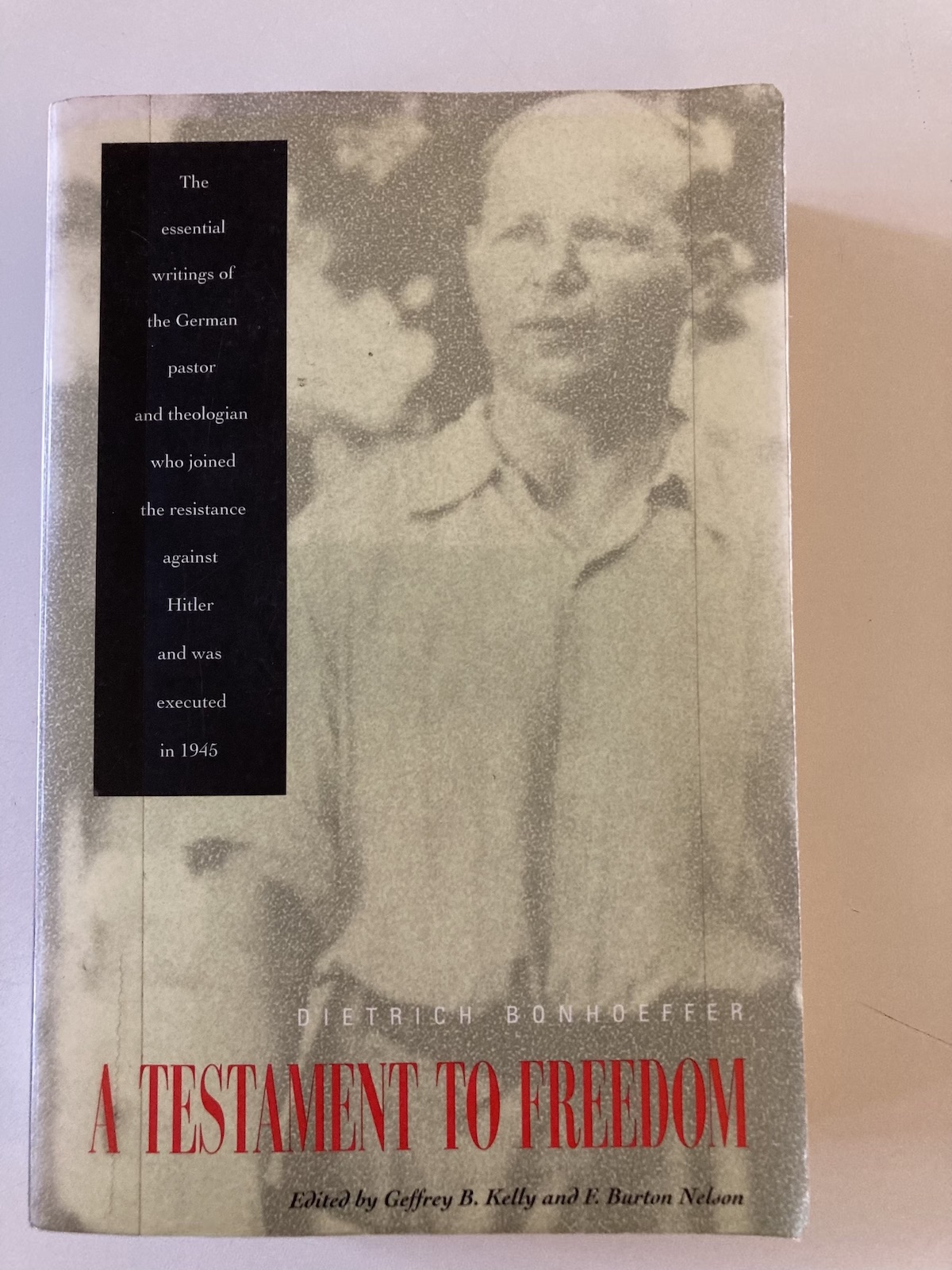
With thanks to my local library’s interlibrary loan program, I’ve just picked up a book that will keep me occupied during Advent and probably well into January: A Testament to Freedom: the Essential Writings of Dietrich Bonhoeffer (ed. Kelly and Nelson, Harper San Francisco, 1995). Bonhoeffer was a German Lutheran pastor who was part of the German resistance to Hitler – a commitment for which he paid with his life. I’ve encountered his sermons and other writings in bits and pieces over the years, and it’s time I read his work in context even if not quite in full. He deserves more than the occasional quote in a meme.

I’ll alternate chapters of Bonhoeffer with chapters of a much shorter work that’s an old favorite of mine. Confessions of a Twentieth-Century Pilgrim (Harper & Row, 1988) is by Malcolm Muggeridge. He was a distinguished journalist who came to the Catholic faith fairly late in life, and Confessions is his account of how he got there. Meeting Mother Teresa in the course of his work was an important factor, but conversion of heart and soul was a years-long process. The book is pithy and brief, as befits a journalist who’s accustomed to getting a point across quickly. Muggeridge’s own style and humor make this conversion story compelling.

Who knew that hikers had book clubs? I do now, having discovered an organized group of hiking bookworms in my area. I just attended my first meeting with them via Zoom, where we discussed The Salt Path by Raynor Winn (Penguin Books, 2019). I was intrigued by what I’d heard about the book, which is on one level an account of a trek along England’s Coastal Path by the author and her husband. Reading the book was a revelation: the long trek was the backdrop, not the feature. The Salt Path is a moving memoir about a devoted couple dealing with a pair of personal disasters that turned their lives upside-down and left them homeless. Winn’s story isn’t about fun or romance or adventure, but rather about tenacity and mature love. It’s also an extended meditation on how people treated her and her husband as homeless people. Her evocative descriptions of the harsh and beautiful coast never overshadow her personal story.

I won’t wish readers a Merry Christmas just yet. Let’s not rush through Advent. May this time of preparation be one of prayer, peace, and good reading for you and yours.


Open Book is a blog roundup hosted by Carolyn Astfalk at My Scribbler’s Heart and by CatholicMom.com.

Header photo: Gerd Altmann/Pixabay